
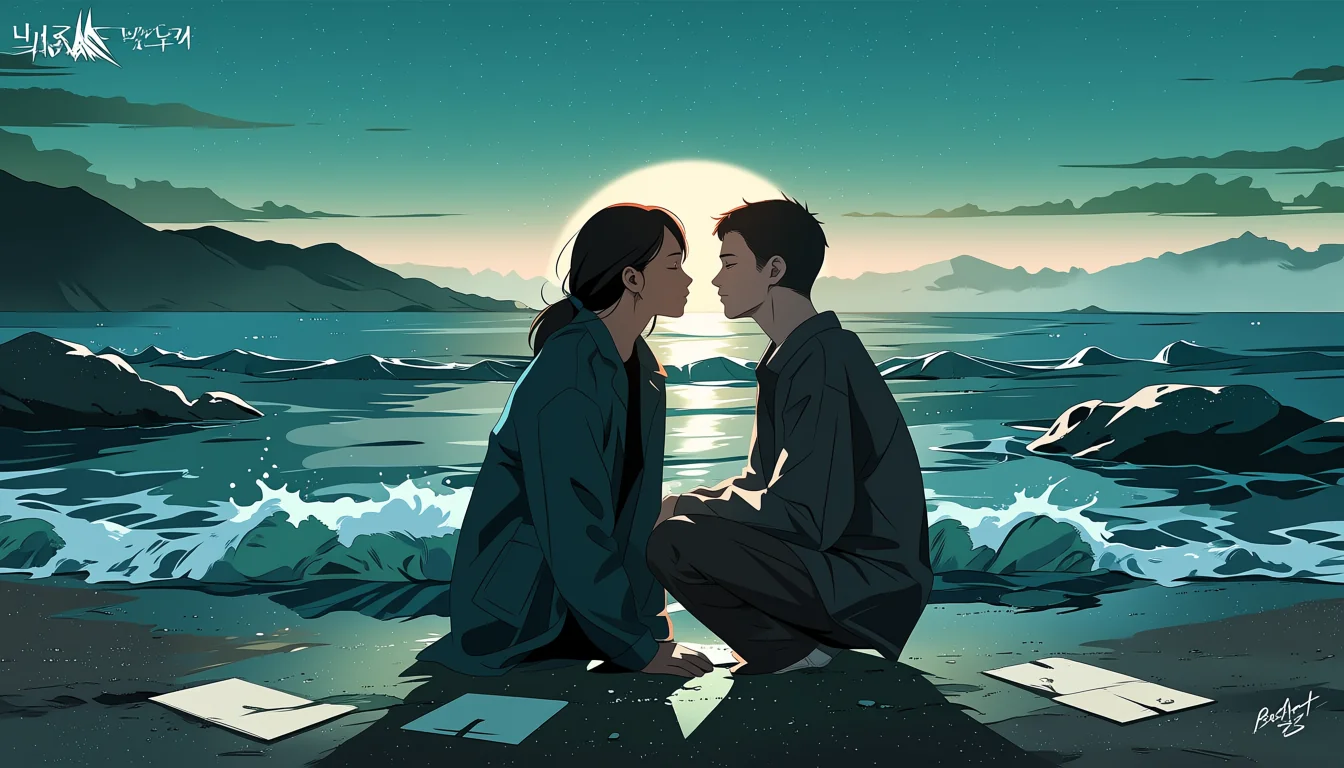
People say show and picture a season. Adult animation rarely works that way. The standard shape is two episodes, sometimes four, each running twenty to thirty minutes, released months apart and often adapted from a comic. That format is unforgiving in a specific way: there is exactly enough room for one relationship and one question about it, and any series that tries for more comes apart in the middle.
The two-episode shape
Episode one establishes who these fictional adults are and what stands between them. Episode two answers it. There is no room for a B-plot, a rival, or a flashback structure. Writers who came from longer formats often overload the first half and then have to sprint, which is why so many second episodes feel like summaries of a better version.
The shows that work treat the constraint as the design. One setting. One night, or one week. Two people and maybe a third who exists to change the temperature of a scene. Everything else gets cut before the storyboard, not during production when cutting costs money and shows.
You can spot the discipline from the synopsis. If it names more than three characters and two locations, the middle is probably going to be thin. That prediction holds surprisingly often, and it pairs with the budget reading described in hentai video pacing.
Distance is the real subject
The reliable engine in a short adult series is physical and emotional distance. How close do these two stand? Who closes the gap and who waits? What changes after? Distance is easy to show, needs no dialogue, and reads at any screen size, which makes it the most efficient storytelling tool available to a small production.
Distance also survives adaptation and translation, which words do not. A frame that puts two people at opposite ends of a room says the same thing in every language and at every screen size. That reliability is why storyboard artists on tight schedules reach for it first and why it rarely reads as a shortcut.
Watch the staging in the first three minutes and you can usually predict the whole arc. Two people at opposite edges of a wide frame have somewhere to go. Two people already close have to find another axis, usually honesty rather than proximity, and that is a harder story to tell in forty minutes.
Adaptation and what gets lost
Most of these shows adapt a comic. The comic had two hundred pages; the show has forty minutes. Adaptation means choosing which third to keep, and the usual mistake is keeping the events rather than the pauses. Events compress badly and pauses are what made the original feel like anything.
Good adaptations cut whole subplots to keep the quiet scenes intact. Bad ones keep every plot point at double speed and lose the reason anyone cared. If you know the source, you can tell within ten minutes which decision was made. The comic side of that translation is in how adult manga handles intimacy panel to panel.
Endings that close and endings that hold
A short series can end two ways honestly. It can close the question, which is satisfying and final. Or it can hold it open on purpose, ending on a choice rather than a resolution, which is riskier and lands beautifully when the setup earned it. What does not work is stopping because the runtime ran out.
The held ending is the one this haven tends to prefer, because it treats the audience as capable of sitting with something unresolved. It also matches how the material is actually watched: late, alone, in a mood that does not need everything tied off. The craft of that final beat is unpacked in the quiet minute after an intimate scene.
What makes a hentai show worth the forty minutes
A small cast, one clear question, staging that uses distance, an adaptation that kept the pauses, and an ending that was chosen rather than reached. Five things, none of them expensive, all of them decided long before animation starts.
Forty minutes is not a small amount of time when it is used properly. Plenty of celebrated live-action shorts run less. The complaint that adult animation is thin usually turns out to be a complaint about a specific bad habit, which is trying to fit a season of plot into the runtime of a long lunch break.
And the same floor applies as everywhere else: fictional adults, unmistakably grown, made by people who are credited for it. If a series cannot meet that, no amount of structure saves it. The house position is set out in the understanding of this house.