
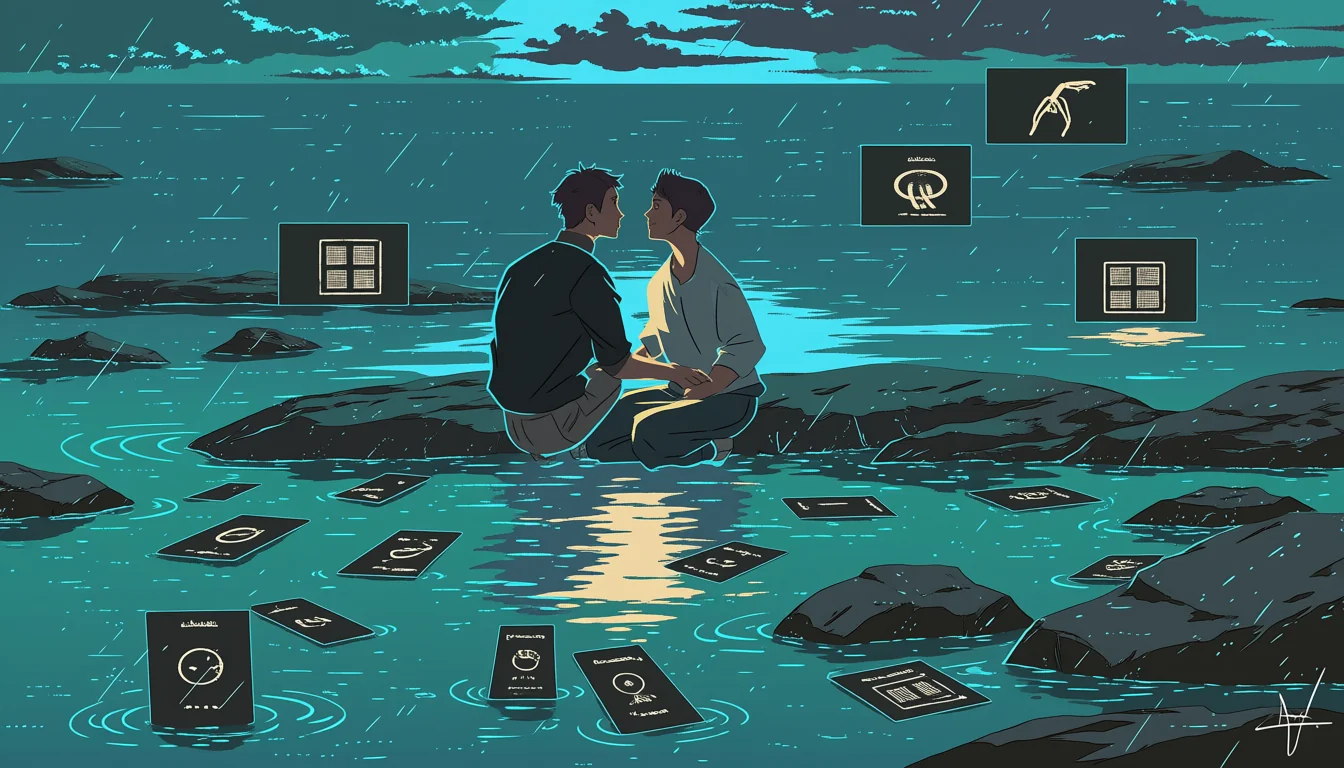
Few adult tropes have an origin story this specific. Tentacle imagery in Japanese art goes back centuries, but its modern dominance in adult animation comes from a legal quirk: depictions of certain human anatomy were restricted, and a non-human appendage was not. Artists worked around the rule, the workaround became a convention, and the convention outlived the law. That history explains a great deal about why the genre looks the way it does.
A workaround that became a tradition
Once a solution is widely adopted it stops being a solution and becomes a style. A generation of artists learned to compose scenes around non-human forms because that was what could be published, and readers grew up with those compositions as normal. By the time regulations loosened, the visual language was established on its own terms.
This is a common pattern in art history. Constraints produce conventions, conventions produce audiences, and audiences keep the convention alive long after the constraint disappears. The same thing happened with limited animation, discussed in hentai video pacing, where a budget limit turned into a recognisable aesthetic.
It also means the trope was never primarily about what people assume it was about. It started as a workaround for a censor, which is a considerably less exotic origin than the reputation suggests.
The consent problem it inherited
Early work leaned hard on monster framing, and monster framing does one thing very efficiently: it removes agreement from the scene. There is nobody to negotiate with, so the material became overwhelmingly about things done to characters rather than chosen by them. That inheritance is the genre's real baggage.
It is not inevitable. Plenty of modern work writes the non-human element as a partner rather than an assault: something with intent, awareness, and the capacity to stop. That change alone turns the same visual idea into a different kind of story, and it does not soften the imagery at all.
Work that keeps the old framing is depicting non-consent, whatever the tag says. This haven does not publish that, and the reasoning is set out plainly in the understanding of this house.
Why it works as design
Set the content aside for a moment and look at it as composition. You get long curved shapes that can lead the eye anywhere in the frame, a silhouette that reads instantly at thumbnail size, colour that can contrast hard against skin, and motion that does not have to obey a skeleton. Very few subjects hand an illustrator that much freedom.
That is a real part of the appeal for artists, and it explains why the trope keeps reappearing in work that has no interest in the original context. The forms are simply useful. They solve compositional problems that human-only scenes make difficult.
They also read well on a phone, which matters more than it used to. Strong silhouettes survive the shrink to a narrow screen, as covered in the 390-pixel test.
Writing it so it is actually a scene
Give the non-human element intent and limits. Let the human character have a way to communicate and let that communication have an effect. Establish agreement early, keep the face in frame, and give the scene an aftermath. These are the same conditions any intimate scene needs; the unusual element does not exempt it.
The result is stranger and better than the default version. A fantastical partner that responds to what a fictional adult wants is genuinely odd territory to write in, and odd territory is where interesting work happens. The generic version, by contrast, has been made ten thousand times.
Where tentacle hentai sits now
It is an old, strange, visually productive tradition with a legal accident at its root and a consent problem it does not have to keep. The artists doing the most interesting things with it now are the ones who kept the design language and threw out the monster framing.
Everything covered here concerns fictional adults, unmistakably grown, in scenes where agreement is visible. If you want to make images in this space, the connected studio with its own safety controls is at the night studio, and the prompting notes live at anima prompting.