
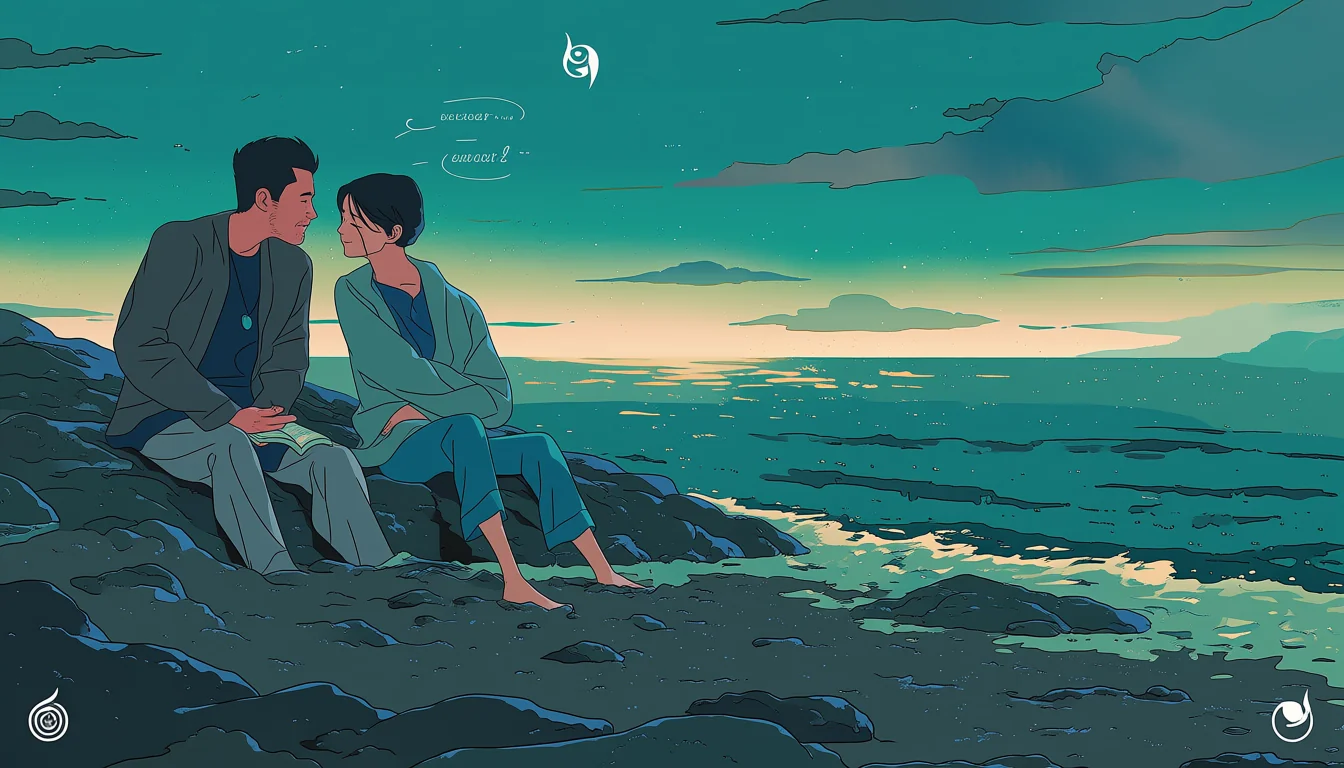
The word core gets attached to a lot of things online, usually to mark an aesthetic rather than a category. Applied to adult animation it points at the mood-first end: work where the light, the room, and the pauses are doing as much as anything else. It is a small corner of a large field, and it is the corner this haven cares about most, so it is worth being precise about what it actually means.
Mood-led rather than act-led
Most adult animation is organised around a sequence of acts. Mood-led work is organised around a state: a time of night, a weather, a specific relationship temperature. The intimate scenes still happen, but they are events inside an atmosphere rather than the structure the whole thing hangs from.
You can hear the difference in the first minute. Act-led work opens with movement and gets to the point. Mood-led work opens with a room, a sound, someone alone before anyone arrives. Neither approach is superior; they are aimed at different evenings and different viewers.
The practical consequence is pacing. A mood-led title can hold a shot for six seconds without anything happening and have that be the best moment in it. An act-led title doing the same thing feels stalled.
Light and sound as the main tools
Nearly all of the effect comes from two departments. Light gives you time of day, weather, warmth, and where the viewer's eye goes. Sound gives you the size of the room, what is outside it, and how still the people in it are. Between them they can carry a scene with very little animation, which is also why this style is affordable.
Cheap does not mean easy. A single lamp source with a warm falloff and a cold window behind it takes real thought to place, and a room tone that convinces takes a sound designer rather than a stock loop. The budget saved on movement gets spent here instead, which is the trade that defines the style.
The same tools are what a still illustrator uses, described from that side in the quiet minute after an intimate scene.
Why it is easy to do badly
Loud work can hide weak drawing behind speed and volume. Quiet work cannot. If the anatomy is off, you will notice, because the shot is being held. If the writing is thin, the silence exposes it. Mood-first is the least forgiving mode in the genre despite looking like the most relaxed one.
The common failure is mistaking slowness for atmosphere. A scene where nothing happens is not automatically moody; it is often just empty. Atmosphere requires something to be accumulating even when nothing is moving, usually tension between two fictional adults who have not yet said what they want.
Finding the quiet end of a loud genre
Search terms rarely help, because thumbnails and tags both reward the loudest frame. Better signals: a single setting in the synopsis, a small cast, a title that names a time of day or a weather, and a running length that seems long for the amount of plot described.
Recommendations from people who like the same thing beat any tag system here. So does simply finishing more titles instead of sampling, which teaches you what the opening minute of a slow piece looks like. That method is set out in watching free the slow way.
What the hentai core corner is for
It exists for the evenings when you want to feel something rather than only to look at something. That is a modest claim and it is the honest one. The material is adult, it is explicit where it chooses to be, and it is built so the explicit parts mean something because of everything around them.
Everything discussed here concerns fictional adults who are unmistakably grown, made by people who deserve to be named for it. The rest of the house position is on why this haven stays quiet, and the connected creation route is at generate manhwa romance.